Apple tree
A native species and a living genetic heritage.

Almaty · a city shaped by an apple landscape
A city grew among apple trees. Its history — and its loss — can now be seen on one map.
Archive, public observation and actions that can be checked.
View the map ↓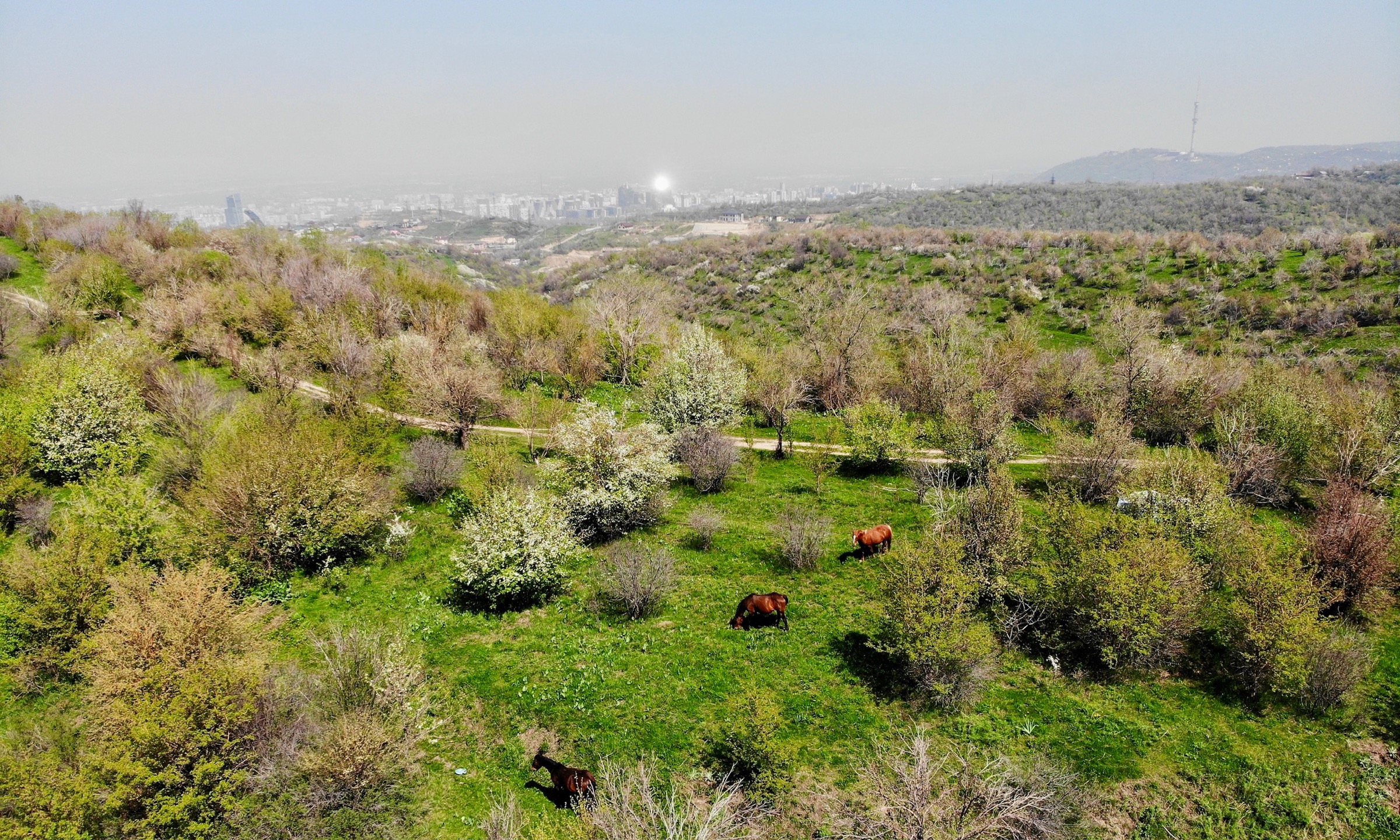
01 / Apple country
Almaty's name is linked to groves of wild apple. Malus sieversii is among the principal ancestors of the cultivated apple.123
A native species and a living genetic heritage.
Altitude, water and aspect shaped the rhythm of fruit.
Collections and nurseries built local horticultural knowledge.
Orchards were infrastructure, not decoration.
02 / Landscape
Altitude, water, terraces, nurseries and the work of several generations.
1931
The city required permission for felling and care for existing trees.
1937
Varieties were collected, tested and developed for local conditions.
1950–1960s
Plantings and harvest periods were distributed along the foothills.
1980s
Records describe a landscape of more than 2,000 hectares and 150 kilometres of terraces.
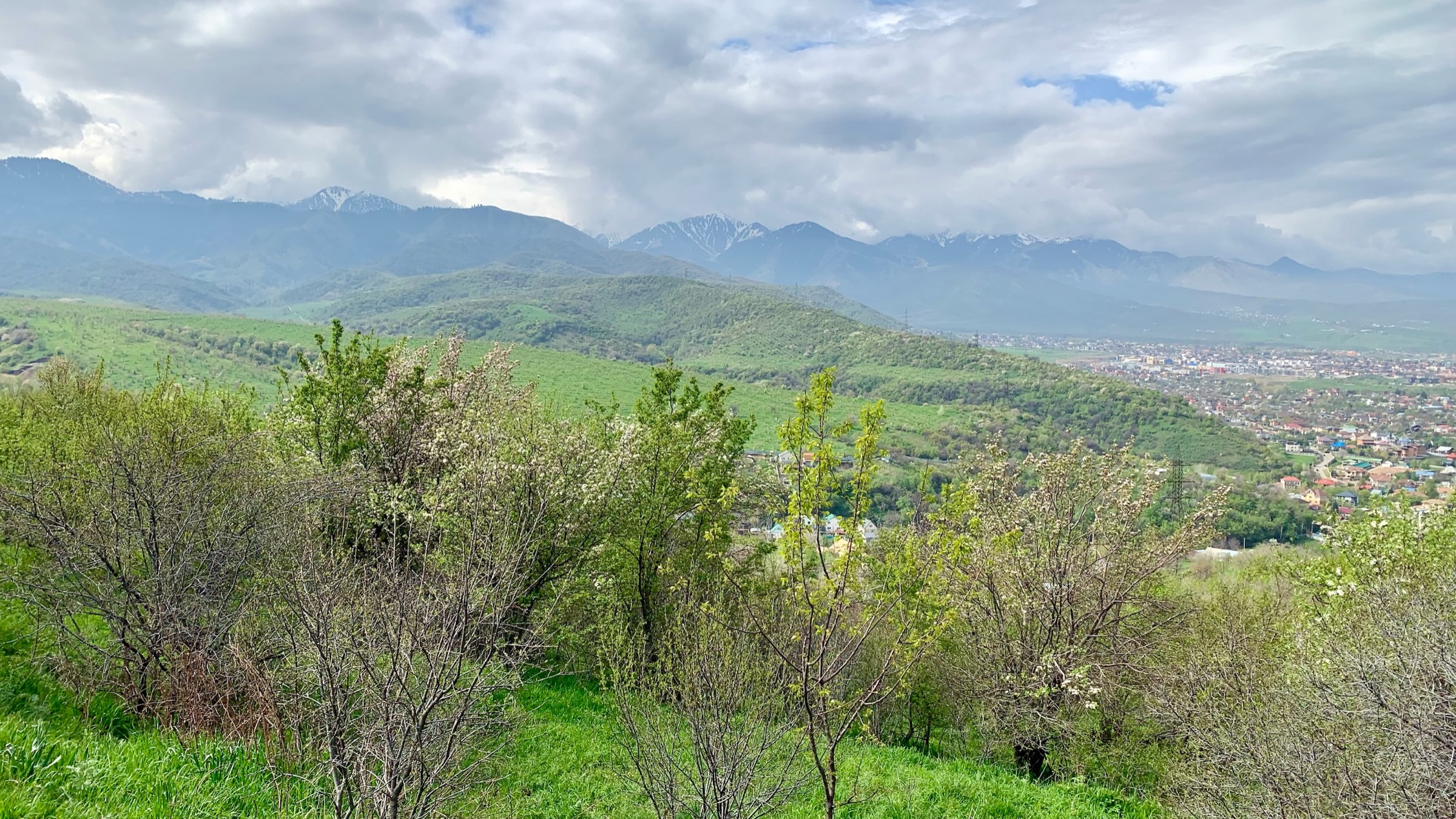
An orchard holds together through land, water, knowledge and work. Lose one part and the whole landscape changes.
03 / What must change
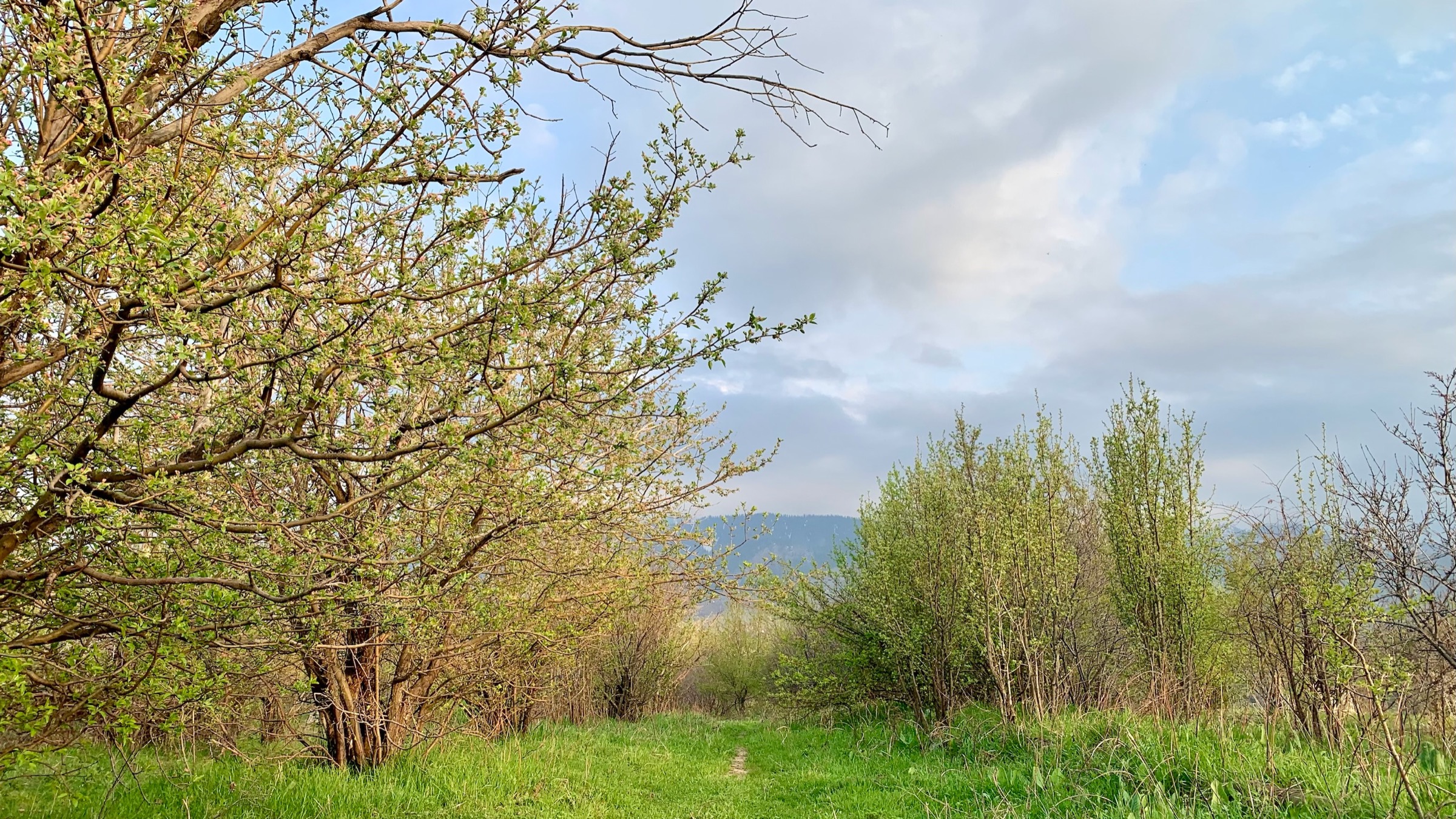
The starting point is an inventory: what remains, what has been lost and what needs an official check. Land-use decisions and land history require primary documents.89
Changes in land designation and the history of land withdrawal need separate checking against official documents.
An orchard remains an orchard. Tourism can support cultivation; it cannot replace it.
04 / Volunteer contribution
Observers walked the foothills, marked living plantings and places that need attention. Their work became a shared map.
The map is an observation result, not a cadastre or legal assessment.
Districts
recorded lostSignals
52 observationsThe map was created from civic observation. In 2025 participants recorded fruit plantings and territories requiring attention; results were systematised in GIS and areas calculated from mapped outlines.10
05 / People did not look away
Residents, journalists and researchers brought orchards back into view — from individual sites to the future of the foothills.
The selection includes all 20 media items in the source register. Media reports provide chronology and public context; legal conclusions require primary documents.
06 / What to do
The first decision is civic: treat orchards as a living agricultural and cultural landscape.8
Map remaining plantings, lost orchards and land requiring review.
Secure orchard zones in plans as a living landscape, not a reserve for construction.
Check land use and decision history against official documents.
Connect nursery, orchard, processing and sales. Tourism is a complement, not a substitute.
07 / Take part
Find a participant in the orchard economy or add an observation.
Open directory
Growers, nurseries, specialists, processing and sales in one searchable catalogue.31
An orchard is alive while fruit can travel from tree to person.
10 participants: from a 17.5 ha family orchard to farms exceeding 400 ha.
Five nurseries offer fruit crops, from apple and pear to cherry.
Nineteen specialists in soils, nutrition, plant protection and diagnostics.
Ten businesses: juice, vinegar, purée, concentrates and other local products.
37 sales channels and two restaurants working with local products.
17 institutes and laboratories: soil, water, plants, breeding and protection.
14 organisations and initiatives: cooperation, volunteering, education and project support.
39 organisations: irrigation, water, fertilisers, equipment, certification and finance.
Open the directory and describe the task in ordinary language.
Field observation
A dated photograph with an approximate place helps compare a site over time.
Record fruit trees from an accessible place.
Photograph visible condition without expert conclusions.
Compare a place with an earlier photograph or observation.
Note visible earthworks, fencing, construction or tree loss.
Add a photo, map, publication or clearly labelled memory.
Return to a marked point and help see change over time.
Material is reviewed manually. Only a safe public version enters the map.
An observation records what is visible. The competent authority makes any legal conclusion.
08 / ALMA Monitor
In development
Public observation where a photograph, place, time and source remain together.
Open ALMA Monitor →ALMA records what is visible, helps check material and prepares a request for verification. Legal assessment belongs only to the competent authority.
10 / What this is based on
Municipal decisions, scientific publications and agricultural reports from 1931–1986.
What the records show
Facts
1931
Decision No. 20 prohibited unauthorised felling and uprooting of fruit and ornamental trees.7
Алматы
A 1955 source explains Almaty as an apple place and connects the name with wild apple groves.1
Генофонд
Almaty thickets were described as an important source of cultivated apple and genetic diversity.1
650–1600 м
A 1957 publication placed the orchards of Gorny Gigant across several altitudinal belts.4
+30 дней
At 1,500 metres, strawberries ripened about 30 days later than at 700 metres.4
25,4 тыс.
In 1961, a nursery grew 25,400 two-year apple saplings per hectare against a plan of 18,000.32
3 подвоя
Wild apple, Chinese apple and Niedzwetzky's apple were used as rootstocks.32
1937
Its work was the introduction, study and local breeding of fruit and berry crops.5
1800 + 500 + 770 + 365
A 1969 booklet recorded more than 1,800 apple accessions, 500 pear varieties, 770 stone fruits and 365 berry crops.5
>36 000
The booklet described 14 apple varieties, three pear varieties and six strawberry varieties.5
>2000 га
A 1986 publication reported over 2,000 hectares of fruit and berry plantings, half of them Almaty Aport.6
900 га / 150 км
It described 900 hectares of terraced slopes and more than 150 kilometres of terraces.6
1000 из 2000 га
More than half the plantings were in poor condition before major reconstruction began.6
Originals
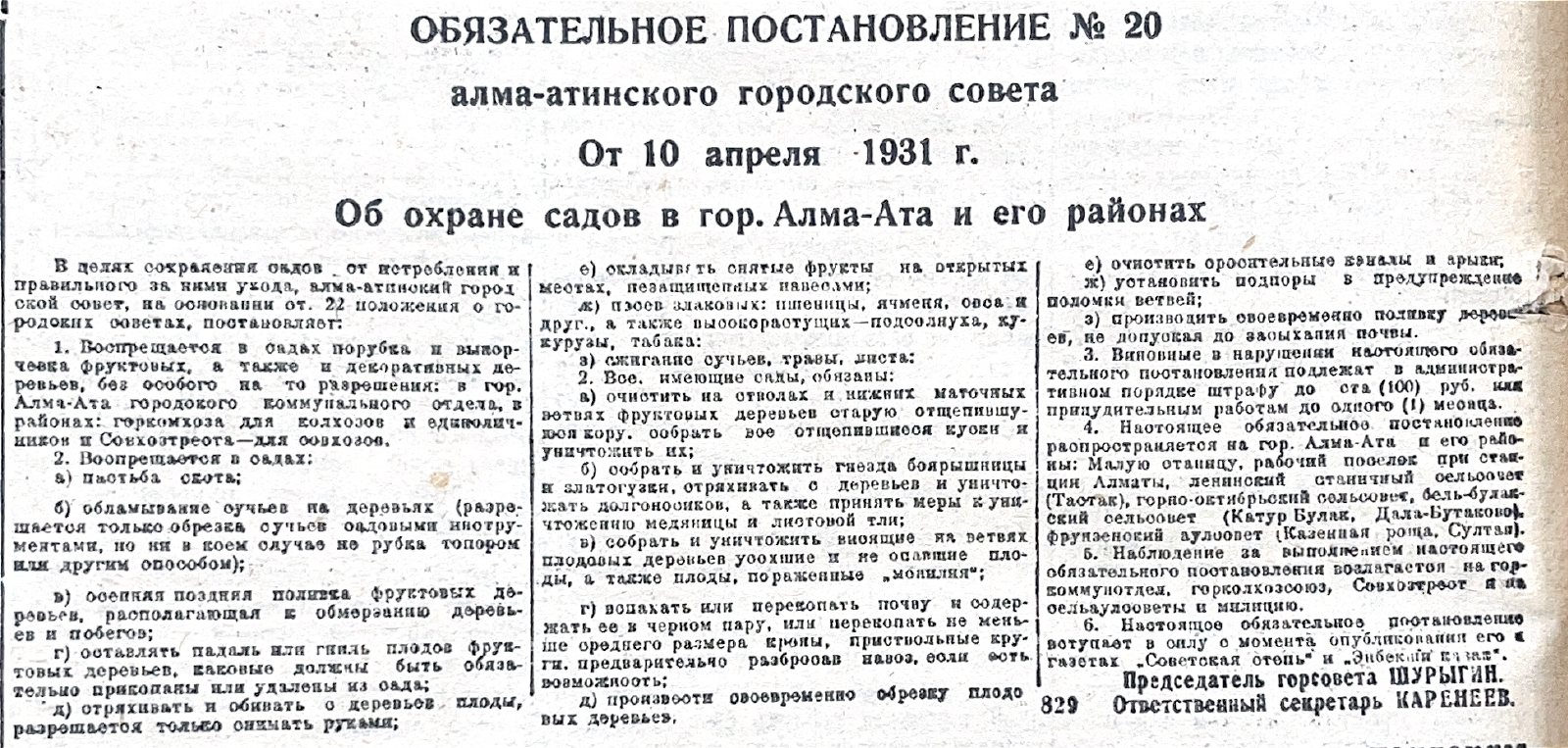
Felling permits and duties of care.
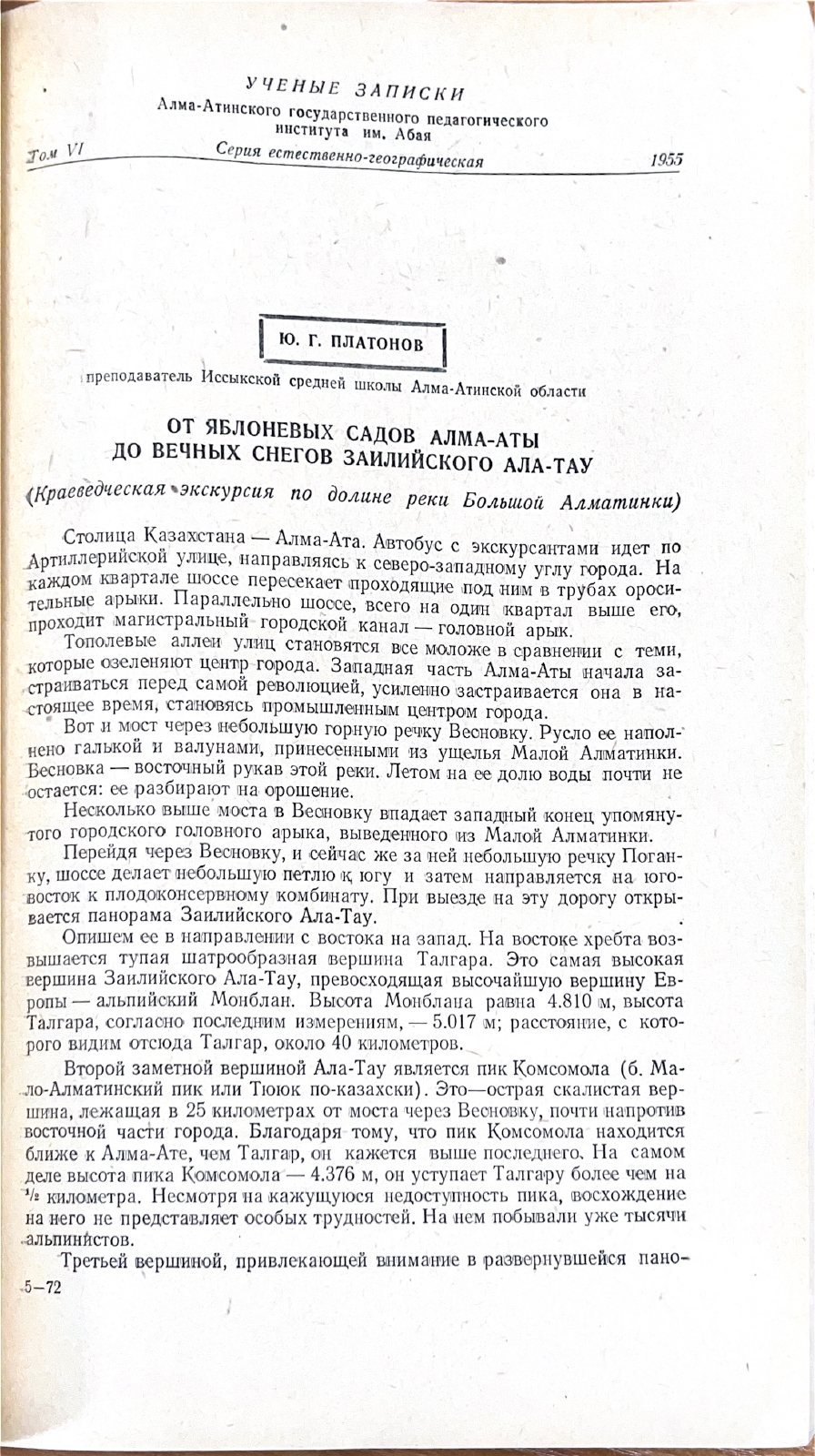
A route through the city, foothills and gorge.
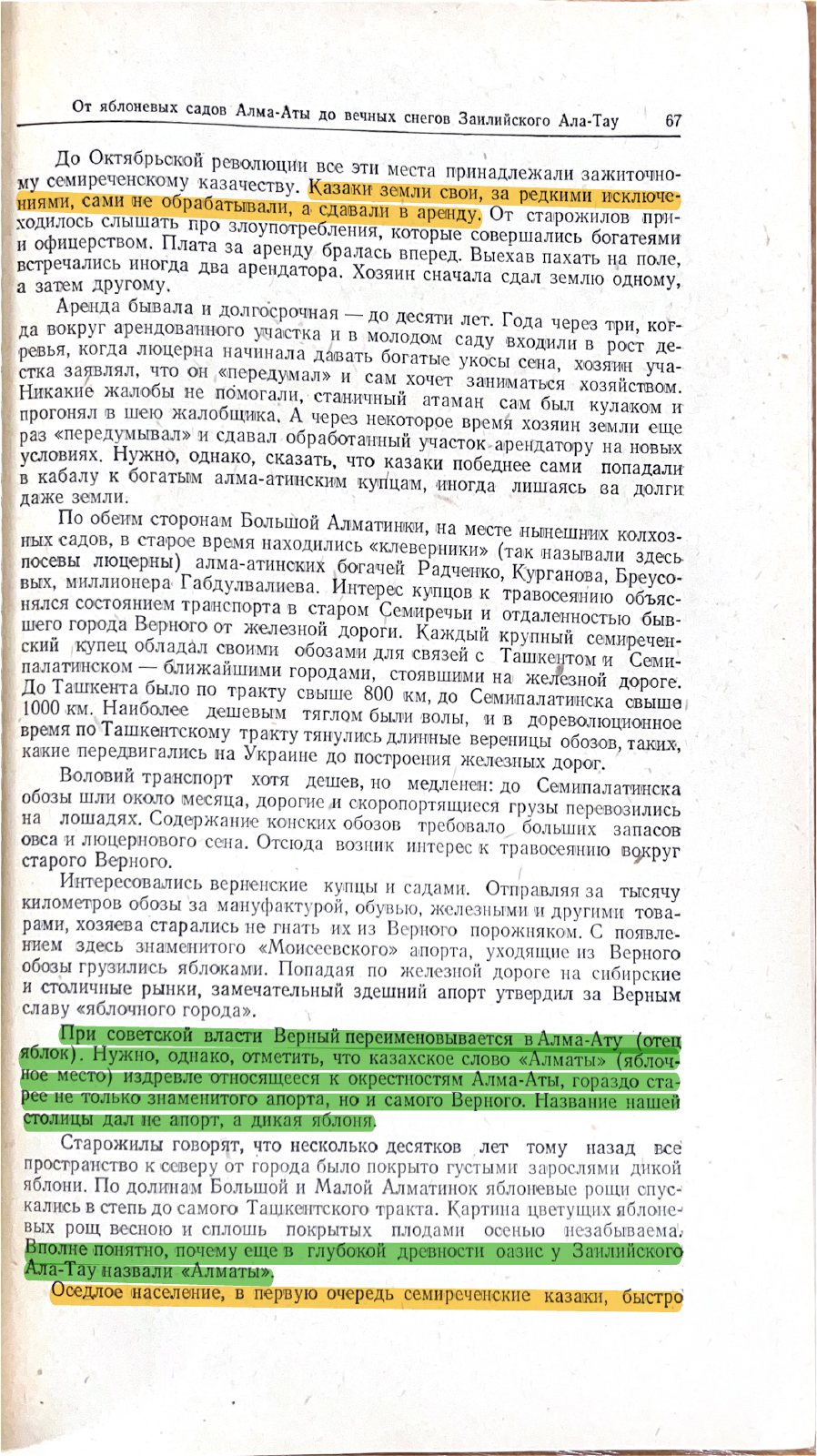
The name's connection with wild apple groves.
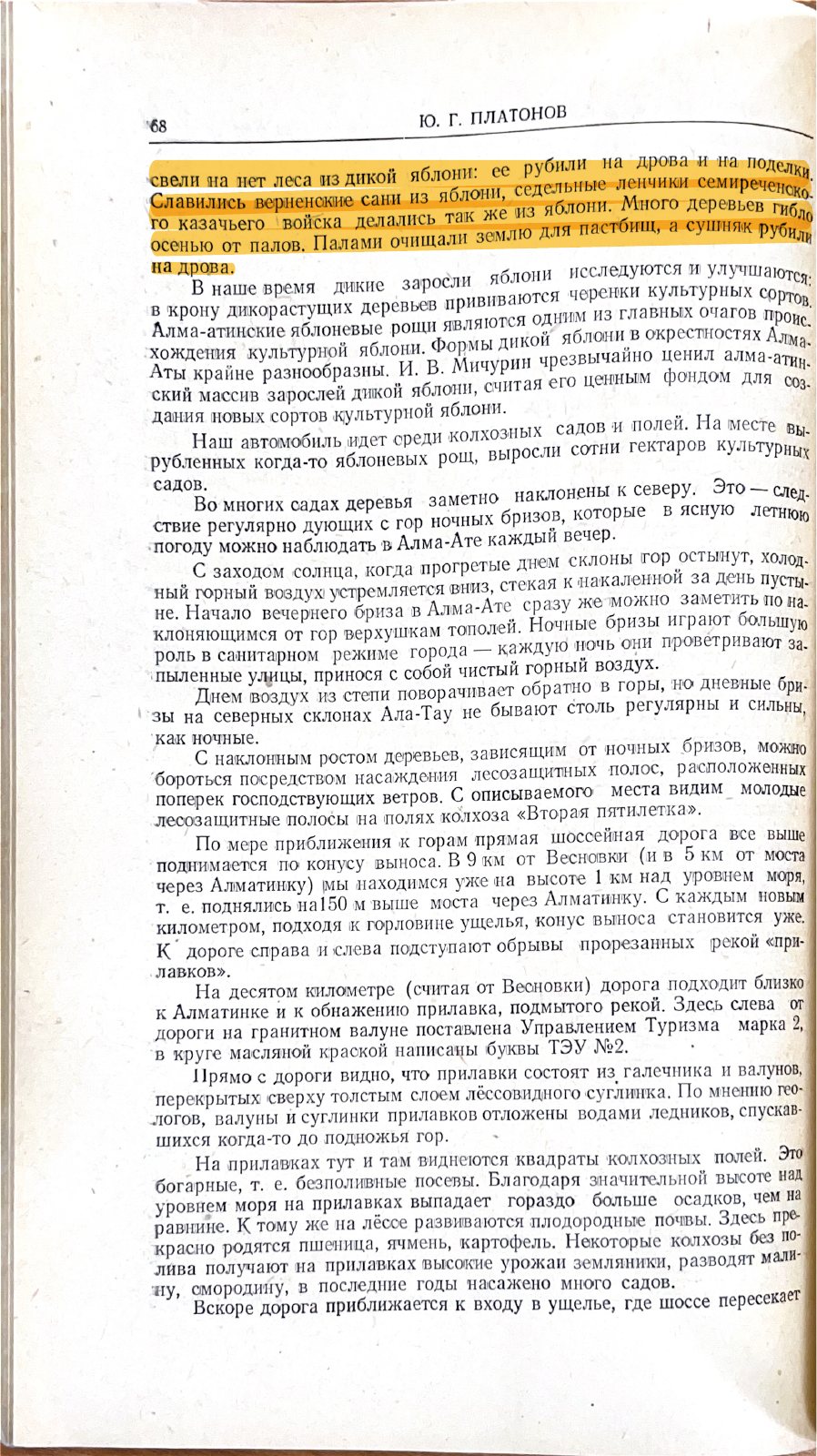
Origins, breeding and the shrinking of groves.
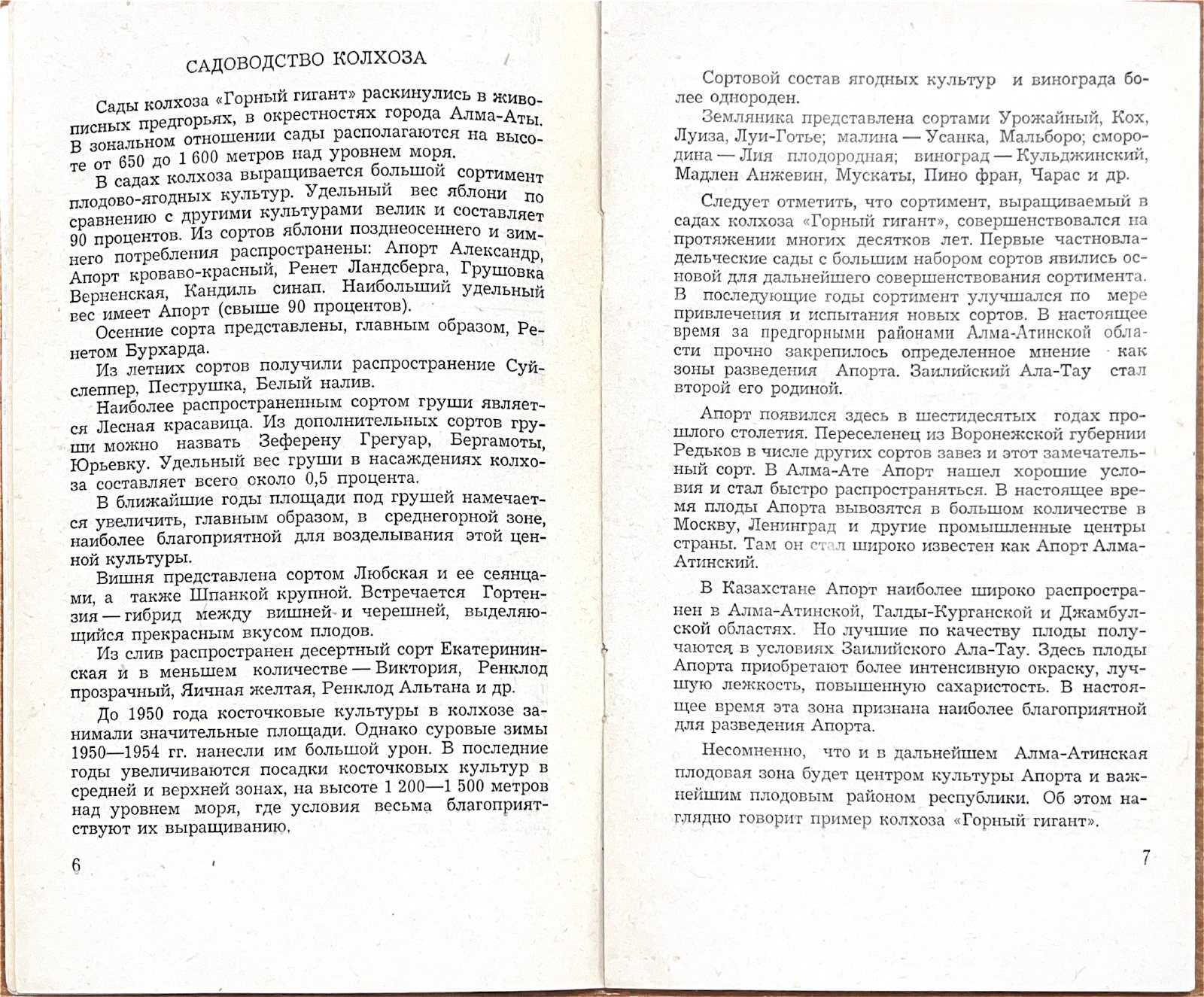
Diagram of crops by altitude.
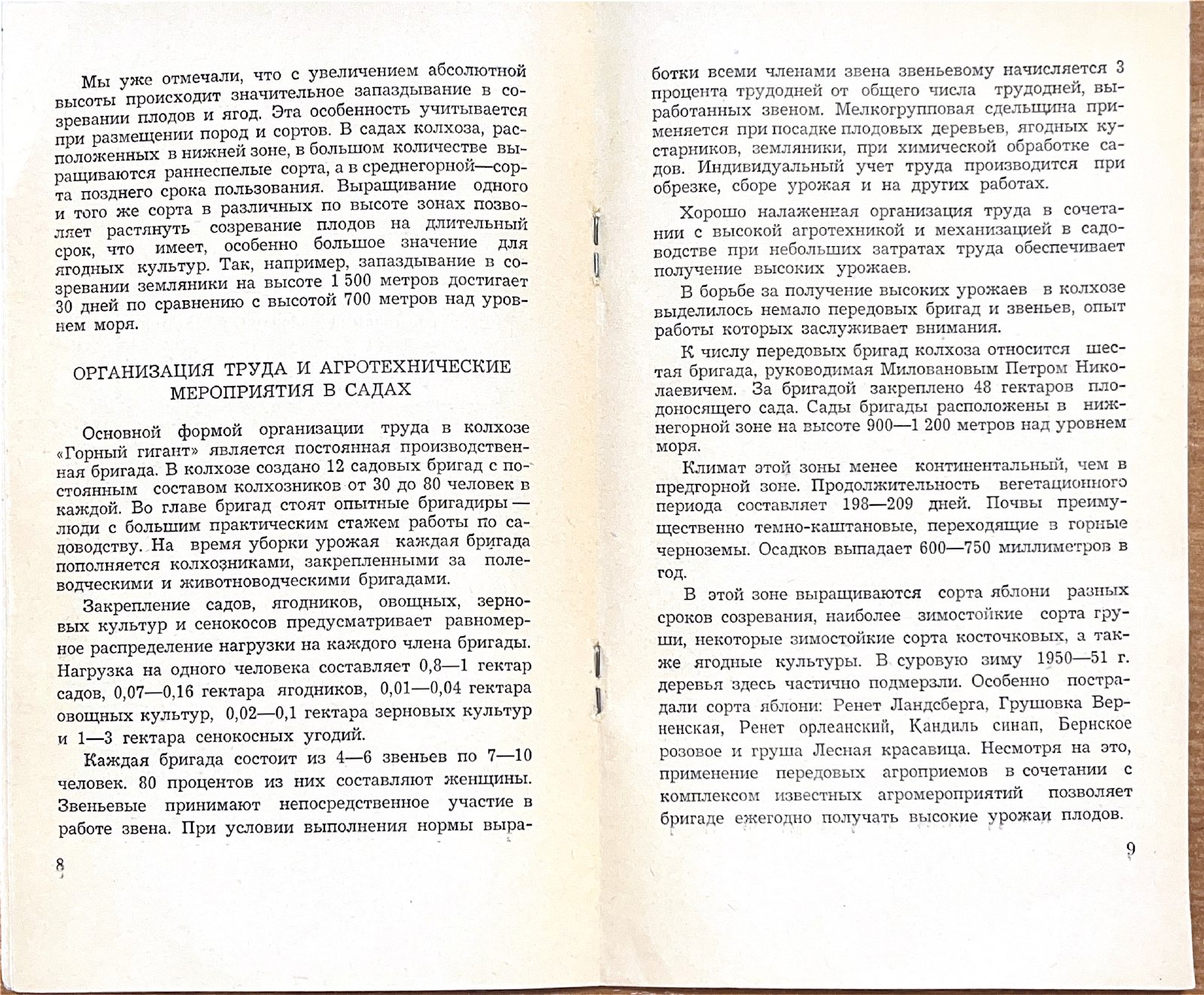
Strawberry ripening at two elevations.
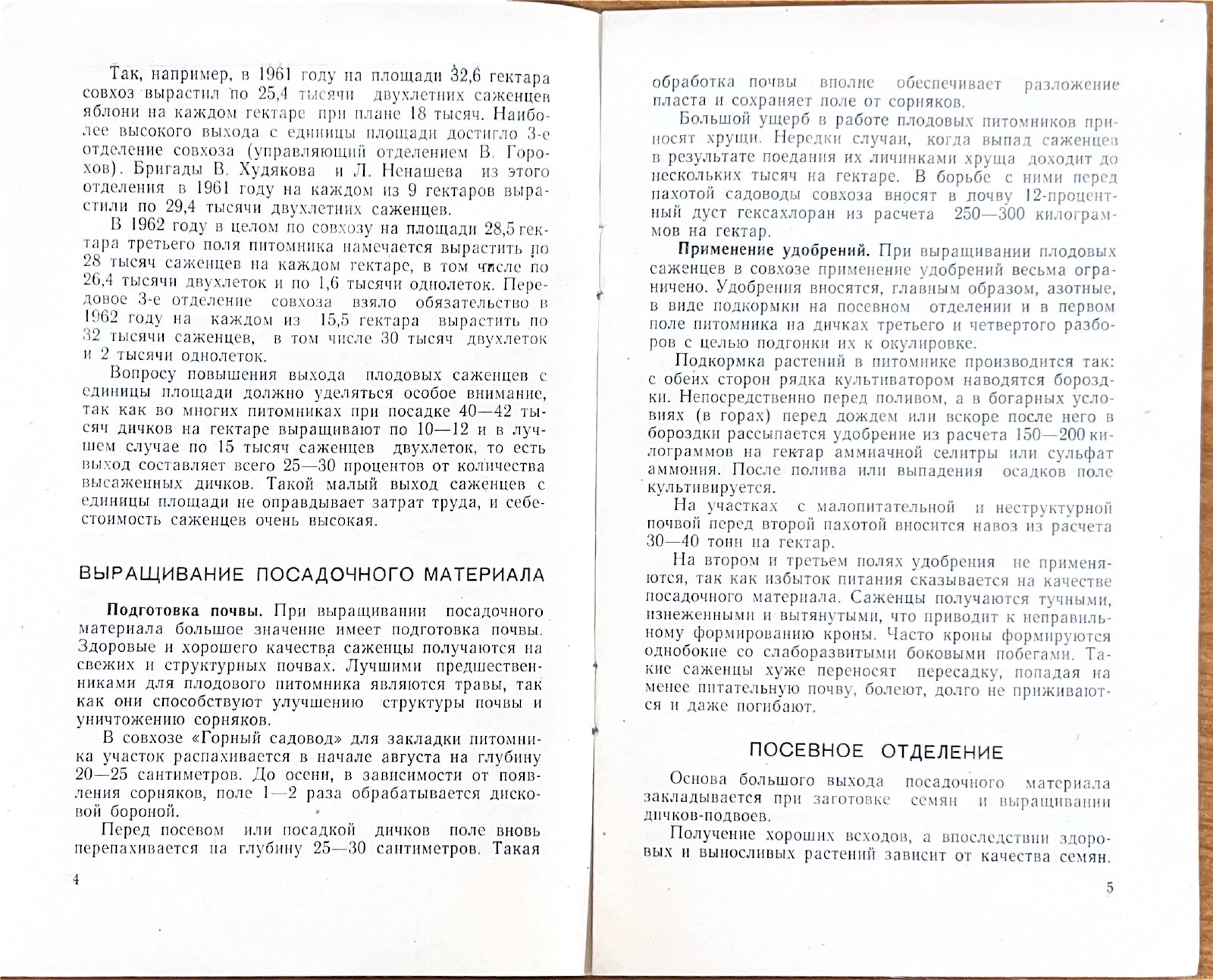
Actual nursery output and plan.
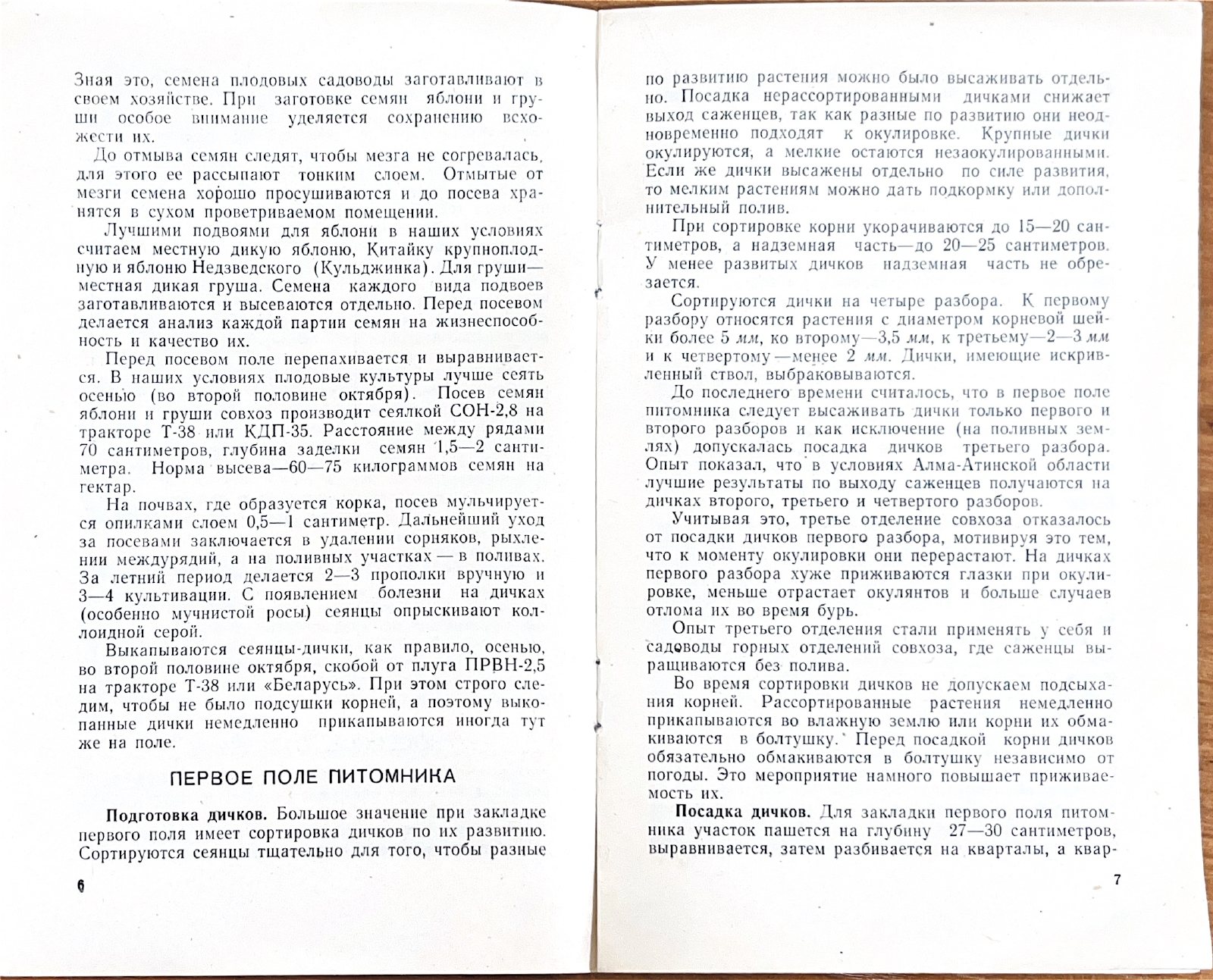
Wild apple and Niedzwetzky's apple in the nursery.
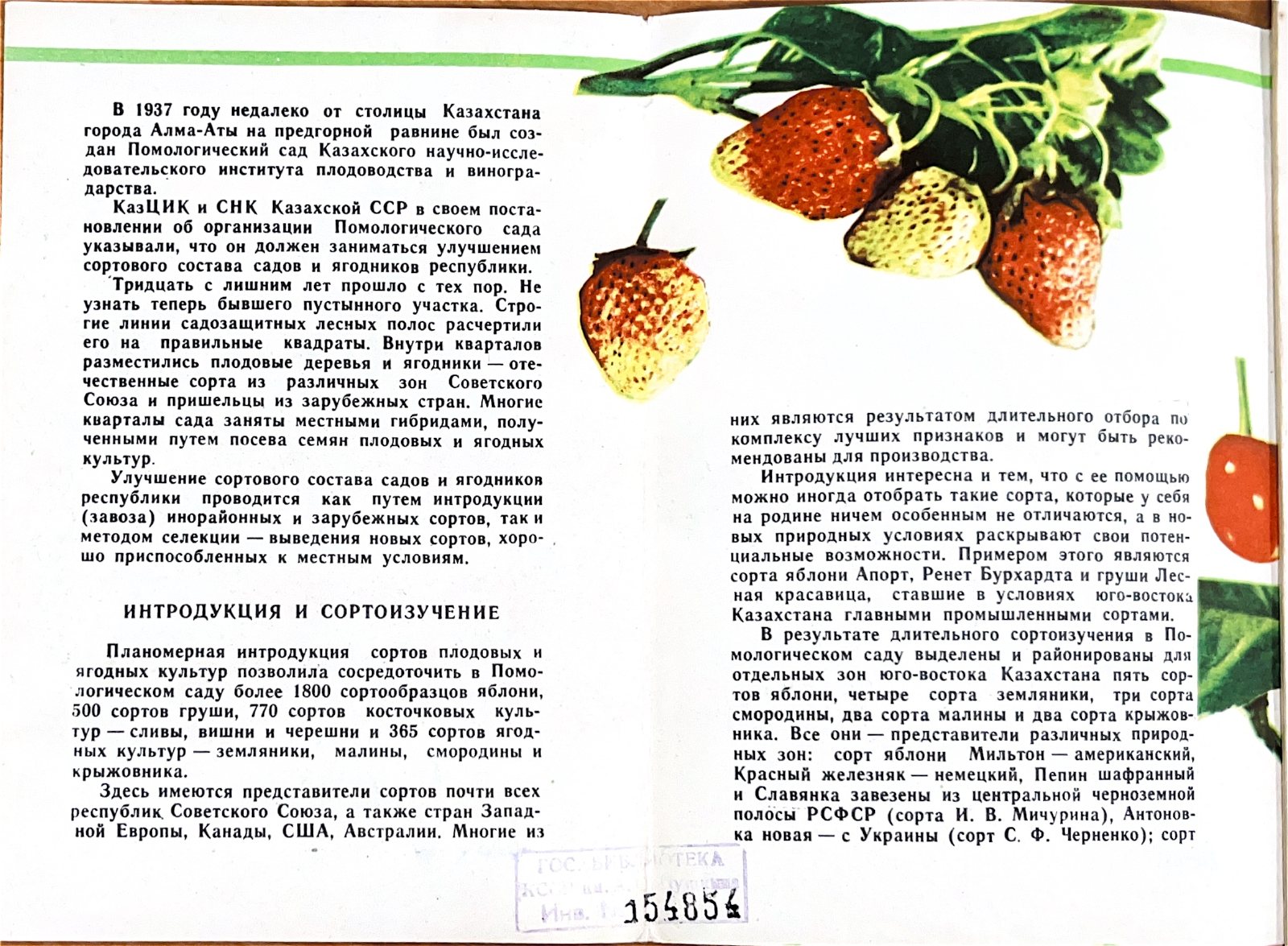
Accessions of fruit and berry crops.
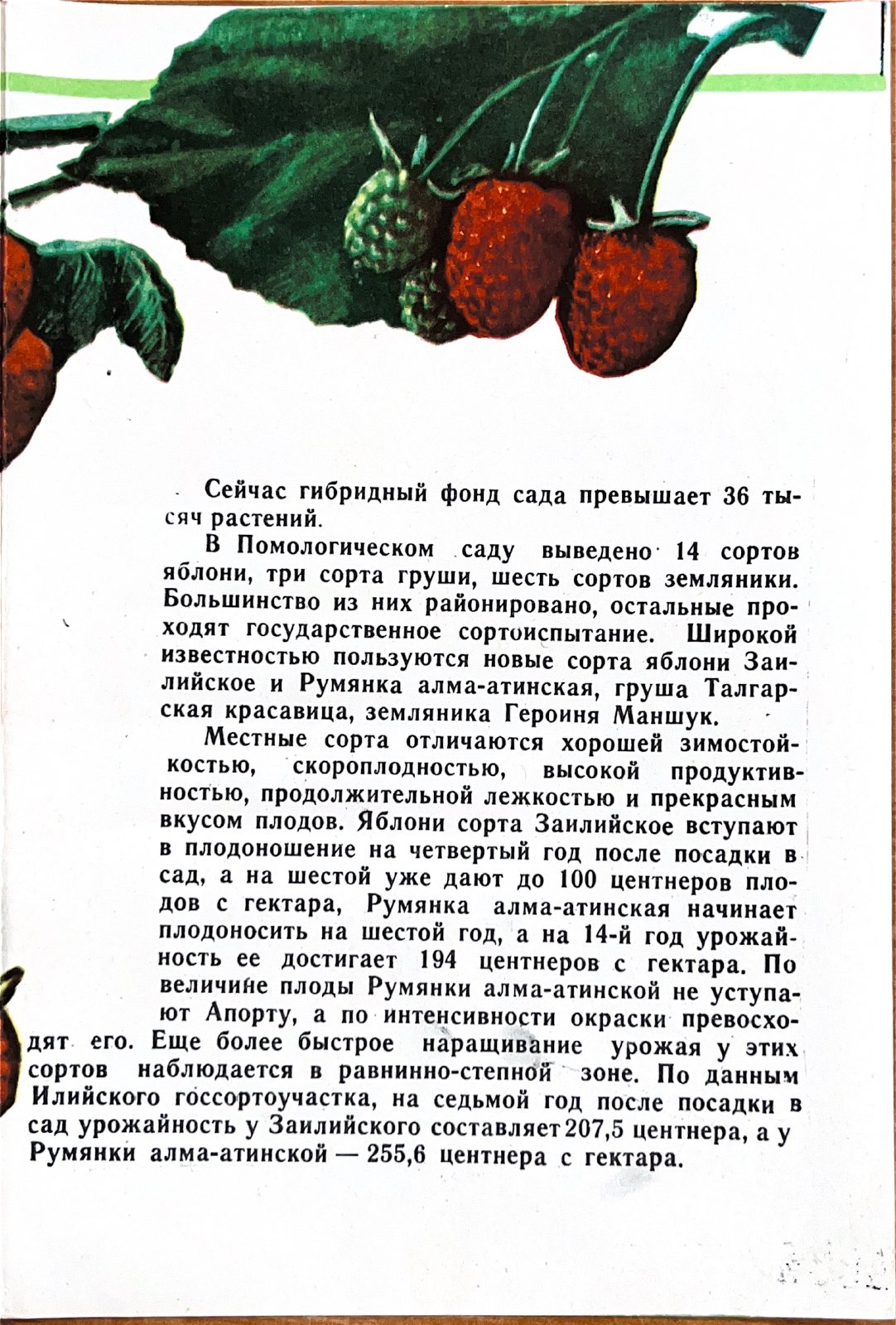
More than 36,000 plants for selection.
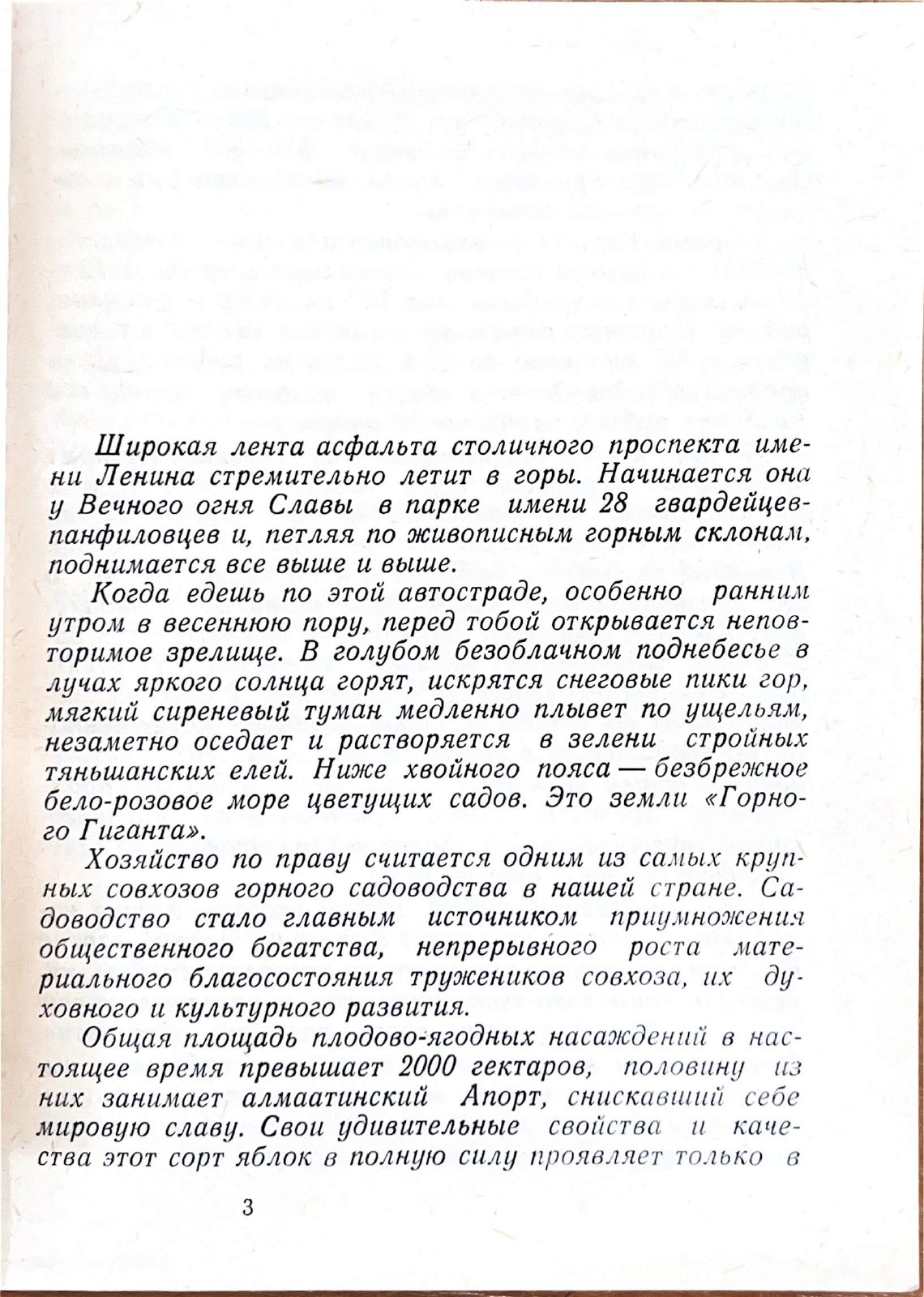
Area of fruit and berry plantings.
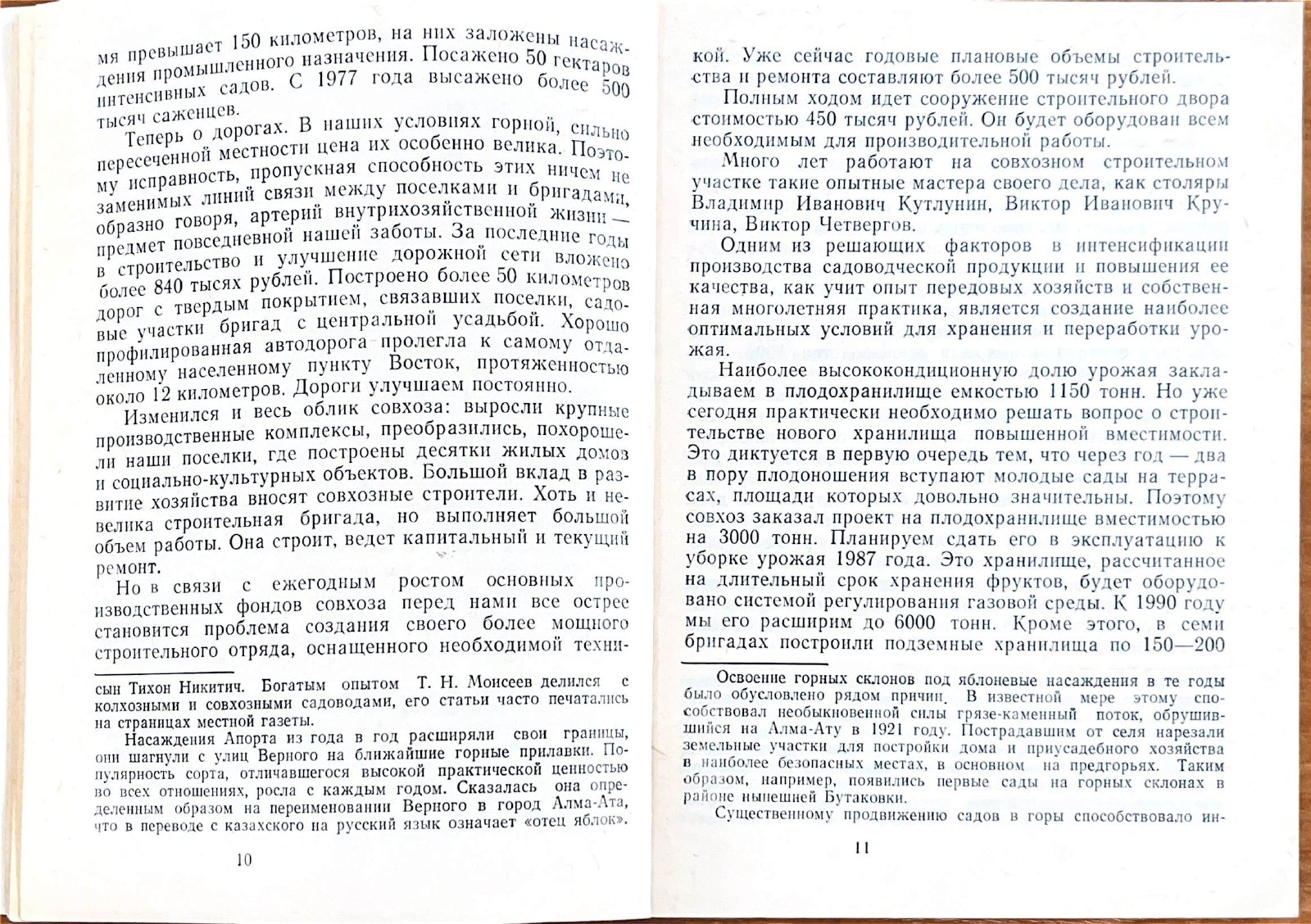
Terraces and planting on mountain slopes.
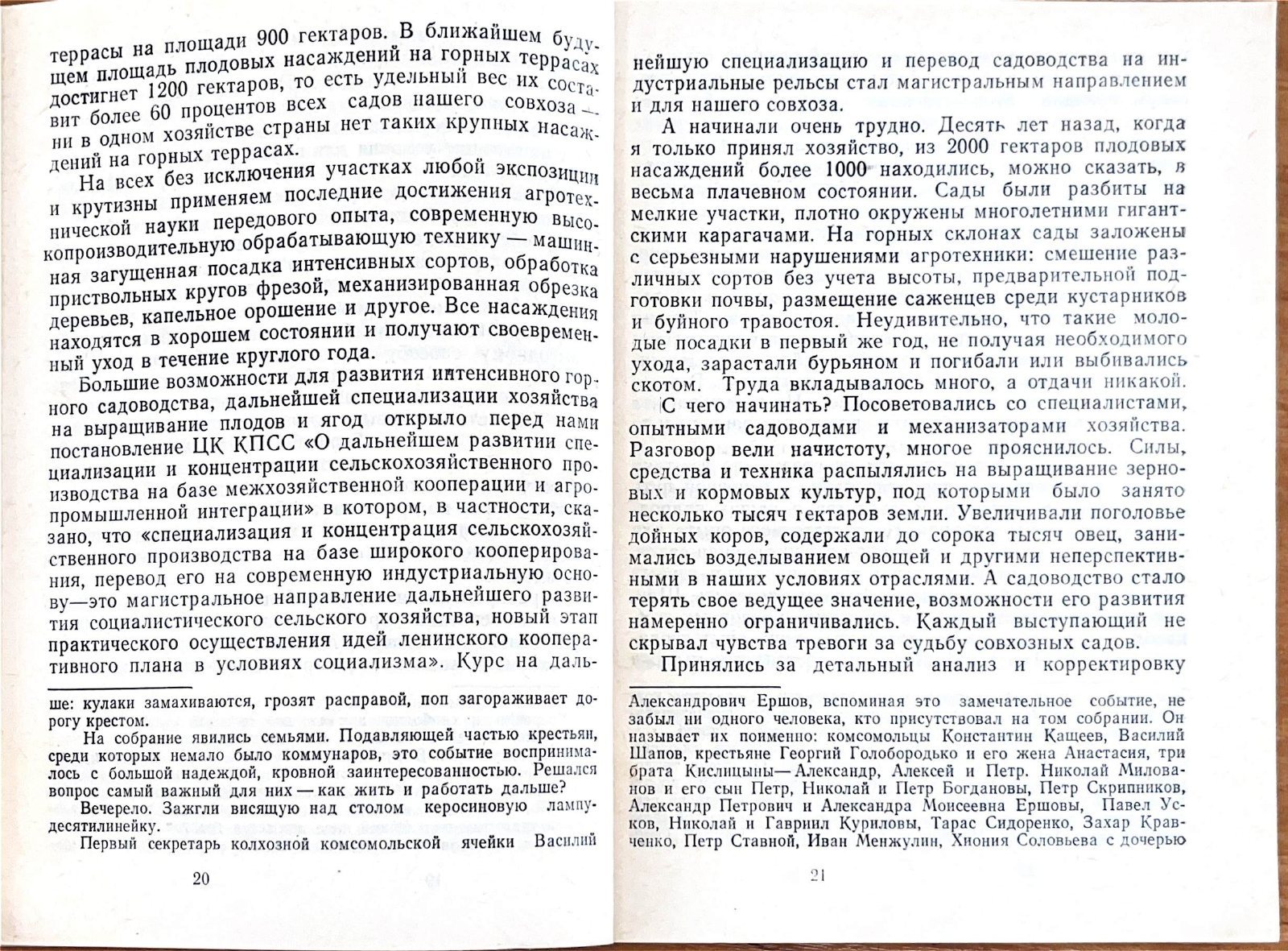
Orchard condition before reconstruction.
Citing
Платонов, Ю. Г. От яблоневых садов Алма-Аты до вечных снегов: краеведческая экскурсия. Алма-Ата, 67–68 (1955).
Duan, N. et al. Genome re-sequencing reveals the history of apple and supports a two-stage model for fruit enlargement. Nature Communications 8, 249 (2017).
Tegtmeier, R. et al. Malus sieversii: a historical, genetic, and conservational perspective. review article (2024).
Скрипникова, О. & Шихматов, Б. Сады колхоза «Горный гигант». Алма-Ата, 6, 8 (1957).
Помологический сад. Алма-Ата, 2, 4 (1969).
Демченко, И. М. Садоводство на горных склонах. Алма-Ата, 3, 10–12, 20–21 (1986).
Алма-Атинский городской Совет Об охране садов в гор. Алма-Ата и его районах. Советская степь 1 (18 апреля 1931).
Сайлыбаев, Е. Р. Алматинские сады. Проблемы и перспективы развития уникального культурного ландшафта. авторское исследование (2024).
Правительство Республики Казахстан О Генеральном плане города Алматы. постановление № 349 (3 мая 2023).
ALMA Публичная геоинформационная выборка: сады и территории общественного контроля. версия 2025-1 (2025).
Sputnik Казахстан Новый поворот появился в деле о разграбленных яблоневых садах Алматы. новостной материал (1 ноября 2019).
Хабар Вырубка яблоневых садов в Алматы продолжается. телевизионный репортаж (6 апреля 2022).
Информбюро 31 Коттеджи на месте яблоневых садов: общественники просят остановить застройку предгорий. телевизионный репортаж (15 ноября 2022).
Хабар Яблоко раздора: в Алматы вырубают уникальные яблоневые сады. архивная ссылка уточняется.
Первый канал Евразия Крадут чернозем и уничтожают яблоневые сады в Алматы. телевизионный репортаж (25 апреля 2023).
ORDA «Мечта» разбилась вдребезги. репортаж (13 марта 2024).
Astana TV Сохранить заброшенный яблоневый сад просят жители Алматы. новостной материал (19 марта 2024).
Kazakhstan Today Алматинцы требуют сохранить яблоневые сады как уникальный культурный ландшафт. интервью (18 сентября 2024).
AlmaLife Яблоневые сады Алматы. Не всё потеряно?. публикация (18 сентября 2024).
ORDA Экоактивисты Алматы пытаются спасти яблоневые сады. репортаж (19 сентября 2024).
Informburo.kz Вернуть апорт, или Как яблоневые сады могут спасти Алматы от смога. публикация (19 сентября 2024).
IAPN / AIPN.KZ Яблоневые сады Алматы: что от них осталось и как можно спасти. публикация (20 сентября 2024).
Tengrinews Как алматинцы борются за яблоневые сады. фоторепортаж (30 сентября 2024).
Первый канал Евразия Алматинский Апорт. Как выживает официальный казахстанский бренд?. телевизионный репортаж (6 октября 2024).
Казахстанская правда Кто остановит атаку застройщиков на фруктовые сады Алматы?. публикация (15 октября 2024).
CMN.KZ Яблоневые сады в Алматы возвращают в госфонд — управление земельных ресурсов. публикация (31 октября 2024).
Asmuth, T. Mit dem Ur-Apfel in die Zukunft. brand eins (1 декабря 2024).
BES.media Яблоневые сады в Ерменсае станут частью Иле-Алатауского нацпарка. публикация (17 декабря 2024).
Базарбек, Б. О садах в Ремизовке. публичное выступление (10 января 2025).
Asmuth, T. Die Zukunft des Apfels. точная публикация и ссылка уточняются.
ALMA ALMA Agrocooperation First Catalog. версия 1.0, 131 запись (2026).
Марков, Н. Выращивание плодовых саженцев в совхозе «Горный садовод». Алма-Ата, 4, 6 (1962).
Soviet publications are evidence, not a model. Their achievements cannot be separated from forced collectivisation and the tragedies of the 1930s.
11 / Why ALMA
ALMA links observation, map and source. The final conclusion remains with the competent authority.
monitor@alma.eco ↗ALMA contribution
SDG 11
Orchard map, archive and resident participation.
SDG 15
Observation of orchards, foothills and landscape change.

SDG 16
Verifiable records, sources and safe requests for review.
SDG 17
Volunteers, researchers, agrocooperation and the open directory.
ALMA's project contribution to selected SDG targets. It is not certification or an official UN statement.